
Industrial automation lies at the heart of modern manufacturing, where precision, consistency, and efficiency are critical to success. Designing an automation system requires more than assembling sensors and machines; it requires a deep understanding of the production process, the ability to anticipate variability, and building systems that can adapt to real-world conditions. Every design decision, whether it’s control architecture or component selection, shapes system performance, reliability, and long-term maintainability.
This guide walks through the core elements of automation, while highlighting key design considerations that affect performance and scalability. Whether you’re developing a single production cell or an entire smart factory, understanding these fundamentals will help you create efficient, adaptable automation systems that stand the test of time.
Foundational infrastructure
A successful automation system starts with a solid physical and control foundation. The infrastructure supports everything from power distribution to operator interaction, ensuring stability and safety under continuous operation. Core infrastructure components include:
- Bench/Frame Enclosures – structural bases for housing electrical and pneumatic components.
- Operator Consoles / HMIs (Human-Machine Interfaces) – enable operators to monitor and adjust system parameters.
- FRLs (Filters, Regulators, Lubricators) – condition air supply for pneumatic components.
- Grounding, Ethernet cabling, and gas handling systems – maintain safety, minimize electrical noise, and support data communication.
Design insight: Plan infrastructure layouts early. Consider accessibility for maintenance, separation of power and signal lines, and protection against vibration, dust, and temperature fluctuations. Poorly planned enclosures or routing can compromise long-term system reliability.
Programmable logic controllers (PLCs)
The PLC is the central controller of most industrial automation systems. It executes programmed logic to manage sensors, actuators, and safety devices in real time. Key PLC features include:
- Modular design for scalability and maintenance.
- Flexible programming environments supporting ladder logic, structured text, or function block diagrams.
- Support for digital and analog I/O, RTDs, timers, counters, and communication protocols.
- Remote monitoring capabilities through Ethernet, wireless, or cloud systems.
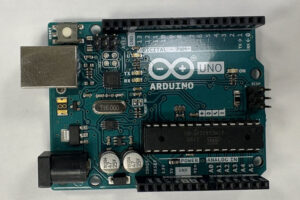
Design insight: Choose a PLC platform based on system complexity and future scalability. Smaller applications may use compact PLCs or microcontrollers, while distributed systems benefit from networked PLCs that handle specific machine zones or functions.
Sensor technology
Sensors form the information backbone of automation systems. They capture real-world data—position, temperature, pressure, vibration—and translate it into signals the PLC can interpret. The accuracy and reliability of these sensors directly affect product quality and system control. Common sensor types include:
- Position Sensors: limit switches, encoders, proximity sensors.
- Transducers/Transmitters: measure temperature, pressure, distance, vibration, or humidity.
- Flow Meters: turbine, ultrasonic, or magnetic types.
- Level Sensors: ultrasonic, capacitive, or float-based designs.
- Light & Vision Systems: photoelectric sensors, laser systems, smart cameras.
Design insight: Match sensor precision and response time to your process requirements. Over-specifying adds cost; under-specifying risks poor feedback and control instability. Consider environmental factors like temperature, contamination, and EMI.
Actuators and Motion Control Systems
While sensors collect information, actuators perform the mechanical work, such as moving, clamping, adjusting, or positioning components. They translate electrical or pneumatic signals from the controller into physical motion. Common actuator types include:
- Electric actuators: driven by servomotors or stepper motors for precise, programmable motion.
- Pneumatic actuators: ideal for rapid linear movements in pick-and-place or ejection tasks.
- Hydraulic actuators: suited for high-force or heavy-duty applications.
Advanced systems utilize servo drives and variable frequency drives (VFDs) to precisely regulate motor torque, speed, and direction, ensuring smooth and coordinated motion.
Design insight: Select actuator types based on required force, precision, and duty cycle. Pneumatics offer simplicity and speed, while electric motion delivers superior control and feedback. For synchronized operations, prioritize motion controllers with closed-loop feedback.
Control architectures and communication networks
Automation systems rely on robust communication between controllers, sensors, and robots. The control architecture determines how data flows and how quickly systems respond to inputs. Primary architectures include:
- Centralized Control: one PLC handles all I/O and logic, making them ideal for compact systems.
- Distributed Control: multiple controllers share tasks via networked communication, improving scalability and fault tolerance.
Industrial communication protocols, like EtherNet/IP, Modbus TCP, PROFINET, and CANopen, enable real-time data exchange between devices. Higher-level supervisory systems, such as SCADA (Supervisory Control and Data Acquisition) and MES (Manufacturing Execution Systems), integrate production control with analytics and enterprise data.
Design insight: Choose an architecture that matches system complexity. Centralized systems simplify debugging; distributed designs improve modularity. Always consider network latency, device compatibility, and future expansion.
Automated metrology and safety systems
Automation depends not only on motion but also on precision and protection. Automated metrology ensures that components meet dimensional and positional tolerances without manual inspection, while integrated safety systems protect both personnel and equipment. Core technologies include:
- Automated Metrology Systems: vision-based or contact probes for real-time measurement and quality feedback.
- Machine Guarding and Interlocks: prevent access to moving parts during operation.
- Emergency Stops and Safety Relays: enable immediate shutdowns under fault conditions.
Design insight: Incorporate safety early in the design process, not as an afterthought. Conduct a formal risk assessment and select safety-rated components (e.g., ISO 13849 or IEC 62061 compliant) to meet regulatory standards.
Robotics applications
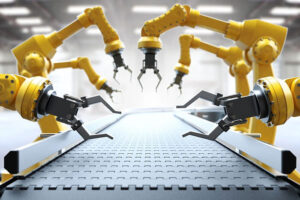
Modern industrial robots extend far beyond repetitive pick-and-place tasks. They’re capable of complex operations, including welding, painting, packaging, and inspection, integrated with vision systems for adaptive control. Common applications include:
- Pick and Place
- Assembly and Inspection
- Material Handling & Packaging
- Palletizing/Depalletizing
- Cartoning/Wrapping
- Machine Tending (e.g., CNC, injection molding)
- Welding (Arc, Spot, Laser)
- Spray Painting/Coating
- Collaborative Robots (Cobots)
Design insight: Select robots based on payload, reach, and precision requirements. Consider space constraints, cycle time targets, and the degree of human-robot interaction. Cobots are ideal for flexible, small-batch production, while industrial arms excel at high-speed, repetitive tasks.
The best automation systems are engineered with purpose, striking a balance between capability, cost, and complexity. By understanding the building blocks of industrial automation, engineers can design systems that not only improve today’s productivity but also evolve alongside future technologies. As manufacturing transitions toward smart factories and connected ecosystems, thoughtful design will remain the key to scalability, safety, and innovation.
About Synectic Product Development: Synectic Product Development is an ISO 13485 certified, full-scale product development company. Vertically integrated within the Mack Group, our capabilities allow us to take your design from concept to production. With over 40 years of experience in design, development, and manufacturing, we strive for ingenuity, cost-effectiveness, and aesthetics in our designs.