
A CENTURY OF MANUFACTURING
Contract Manufacturing Services
From Part Fabrication to Finished Product
Synectic and the Mack Group manufacture parts, assemble complete products, and manage the fulfillment behind them, from low-volume runs to high-volume production, backed by over a century of manufacturing experience.
RELIABLE CONTRACT MANUFACTURING
One Stop Contract Manufacturing, Ready for Your Product
Contract manufacturing with the Mack Group means access to real capacity: 11 facilities, 1.5 million square feet of manufacturing space, and 120+ injection molding presses ranging from 28 to 4,000 tons through Mack Molding alone. What began with simple mechanical sub-assemblies over a hundred years ago has grown into complete systems assembly, build-to-order, and order fulfillment.
You can take advantage of the full partnership, or take a more a la carte approach and pick only the pieces your project needs. For the complete picture of what Synectic and the Mack Group offer together, see the Mack Group Advantage.
US Based Manufacturing
Mack Group facilities across the United States mean real capacity to scale, from a first production run to full volume.
100+ Years of Manufacturing
The Mack Group has been manufacturing since 1920, with supplier relationships and processes refined over decades, not years.
Debt-Free, 5A1 Rated
Mack Molding operates debt-free with a 5A1 Dun & Bradstreet rating, the highest financial strength rating a private company can hold.
PART FABRICATION
Fabrication Methods for Production Parts
Turning prototypes into production parts means choosing the right fabrication method for your components, creating design tolerances for the component production method, and choosing a scalable process. Once a part is fabricated, finishing and painting can be applied for appearance and durability, from powder coating to plating. All fabrication happens in-house across Synectic and the Mack Group.
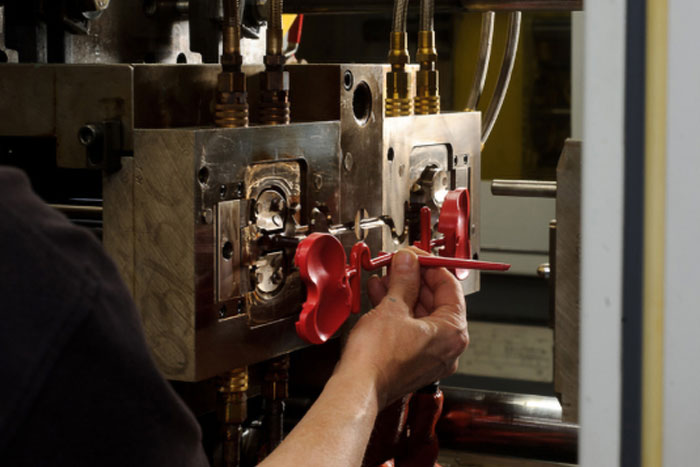
Injection Molding
Plastic injection molding produces high-volume parts from a single tool, injecting molten resin into a mold cavity to form each part identically. Gas-assist and structural foam molding reduce material weight and eliminate sink marks over thick sections, improving both cosmetics and cost. Once the tool is built, per-part cost drops significantly at volume.
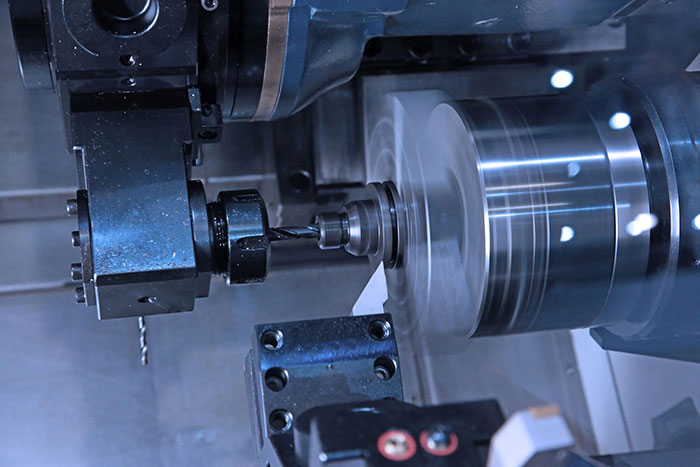
Machined Parts
Precision CNC machining cuts metal and plastic parts to exact tolerances, scaling the same subtractive process used in prototyping up to production volume. It's a strong fit for parts that need tight dimensional accuracy or use materials that don't mold well. Because no tooling investment is required, it also works well for lower-volume production runs.
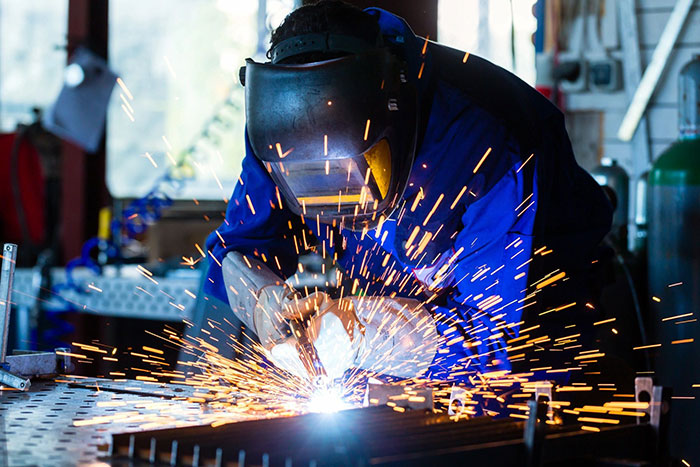
Sheet Metal Fabrication
Laser cutting and CNC punching shape flat metal stock into enclosures, brackets, and structural parts, with press brake forming handling the bends. Neither process requires custom tooling, so design changes between runs are fast and inexpensive. It's a common choice for parts that need strength and rigidity that plastic can't provide.
ASSEMBLY & MANUFACTURING SUPPORT
From Sub-Assembly to Your Customer's Door
Assembly
Our lean manufacturing model constantly refines the assembly process, identifying cost reduction opportunities at every step. Our assembly team handles complex mechanical and electronic sub-assemblies through to completed products.
- Complex Assembly
- Packaging Assembly
- Sub-Assembled Parts
- Controlled Manufacturing Environment
Manufacturing Support
Give your product the final push to market with warehousing, spare part management, inventory tracking, and distribution. Strategic component sourcing and supply chain management keep costs low and lead times short.
- Warehousing
- Order Fulfillment
- Inventory Tracking
- Supply Chain Management
THE FULL JOURNEY
Contract Manufacturing Completes the Journey
Contract manufacturing is the final phase of Synectic’s product development process, the point where a validated design and process become a real product at scale.
Need a partner for the full journey?
FAQ
Contract Manufacturing - Frequently Asked Questions
What does a manufacturer actually do for my project?
A manufacturer takes your finalized design and produces it at scale, operating the equipment, coordinating materials, and managing the process that turns a validated design into real, sellable units. At Synectic and Mack, that means part fabrication, assembly, and manufacturing support under one roof, rather than three separate vendors.
What is a die in manufacturing?
A die is a specialized tool used to cut, shape, or form material into a specific part geometry, commonly used in stamping and metal forming. We use dies as part of our sheet metal fabrication and part fabrication capabilities.
What is a jig in manufacturing?
A jig is a custom fixture that holds a part in place and guides tools during production, ensuring every unit is made the same way. Jigs are part of how we keep assembly repeatable at volume.
What is tooling in manufacturing?
Tooling refers to the molds, dies, jigs, and fixtures used to produce parts consistently. Tooling investment is one of the first considerations in our part fabrication process, since it directly affects cost and lead time at different volumes.
What is fabrication in manufacturing?
Fabrication is the process of building parts from raw material, using methods like machining, molding, or sheet metal cutting. It’s the first of our three core capabilities, turning prototypes into production-ready parts.
What is a lot in manufacturing?
A lot is a defined batch of units produced and tracked together, often for quality and traceability purposes. We produce both low-volume lots and high-volume production runs depending on where your product is in its lifecycle.
What is private label manufacturing? Do you offer it?
Private label manufacturing is producing a product that another company sells under its own brand. Our build-to-order and a la carte capabilities support this, though every engagement is scoped to your specific product and volume.
What is MOQ, and does Synectic have one?
MOQ stands for minimum order quantity, the smallest batch a manufacturer will produce in a single run. We support both low-volume production and high-volume manufacturing, so MOQ is scoped per project rather than fixed company-wide.
What is subtractive manufacturing?
Subtractive manufacturing builds a part by removing material from a solid block, as with CNC machining, rather than adding material layer by layer. It’s one of the methods we use for metal part fabrication.
What does WIP mean in manufacturing?
WIP stands for work in progress, meaning units that have started production but aren’t yet finished goods. Tracking WIP closely is part of how our lean manufacturing model identifies cost reduction opportunities at every step.
What are the 5S in manufacturing?
The 5S are Sort, Set in Order, Shine, Standardize, and Sustain, a lean manufacturing framework for organizing a production floor. It’s part of the same lean manufacturing model behind our own assembly process.
LEARN MORE
Manufacturing Processes Explained
What Is Injection Molding?
Guide to Selecting Plastic Resin
Introduction to Sheet Metal Fabrication
Product Finishing and Painting Explained
Ready to Put Your Product Into Production?
Tell us about your project and we’ll recommend the right capabilities, volume, and next steps.