
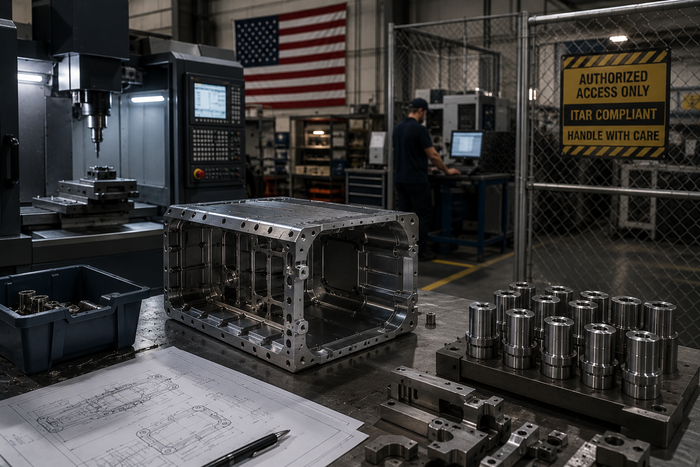
Designing products for domestic manufacturing under ITAR constraints requires more than selecting a U.S.-based manufacturer. Engineering decisions made early in product development can influence export-controlled technical data, domestic sourcing strategies, supply chain resilience, manufacturing readiness, and long-term program success. By incorporating Design for Manufacturability (DFM), secure engineering practices, and compliance considerations from the outset, organizations can reduce risk while preparing defense products for efficient, scalable domestic production.
Why domestic manufacturing starts at the design stage
Domestic manufacturing is influenced by engineering decisions made long before production begins. Material selection, component sourcing, manufacturing processes, assembly methods, and documentation all play a role in determining whether a product can be manufactured efficiently within the United States. For defense programs, these early design choices can also affect supply chain resilience, production scalability, and the ability to meet applicable regulatory and contractual requirements.
Designing with domestic manufacturing in mind from the outset helps reduce costly redesigns, improve production readiness, and create a more reliable transition from prototype to full-scale manufacturing. By integrating manufacturability, sourcing strategy, and compliance considerations early in development, organizations can build a stronger foundation for long-term program success.
Understanding ITAR design constraints
Designing products for defense applications requires an understanding of how the International Traffic in Arms Regulations (ITAR) may influence engineering activities throughout the product development lifecycle. Beyond regulating defense articles and technical data, ITAR can affect collaboration, documentation, supplier selection, manufacturing planning, and access to sensitive project information. Considering these constraints early in development helps organizations establish secure engineering processes while reducing compliance risks as programs progress.
- Technical Data Protection: Ensure export-controlled design information is stored, shared, and managed securely.
- Access Controls: Restrict project access to authorized personnel and maintain appropriate information safeguards.
- Supplier Selection: Evaluate domestic suppliers and manufacturing partners capable of supporting ITAR-controlled programs.
- Documentation Management: Maintain controlled engineering records, revision histories, and configuration documentation throughout development.
- Program Planning: Incorporate ITAR considerations early to minimize redesigns, production delays, and compliance challenges later in the product lifecycle.
Engineering for U.S.-based manufacturing
Engineering for U.S.-based manufacturing begins long before production. Material selection, component sourcing, manufacturing methods, assembly strategies, and supplier capabilities should all be evaluated during product development to ensure a product can be manufactured efficiently within the United States. By addressing these considerations early, engineering teams can reduce redesigns, improve manufacturability, and establish a smoother transition from prototype to production.
Experienced product development teams can often design around potential manufacturing constraints before they become production challenges. This may include selecting domestically available materials and components, simplifying complex assemblies, optimizing part geometry for common manufacturing processes, identifying alternate suppliers, and balancing performance requirements with manufacturing efficiency. These engineering decisions help improve production readiness while reducing schedule, cost, and supply chain risks later in the program.
For defense programs operating under ITAR constraints, early engineering planning also supports more secure collaboration throughout the supply chain. Evaluating manufacturing partners, documentation requirements, production workflows, and sourcing strategies during development helps organizations prepare for domestic manufacturing while maintaining greater control over technical data, configuration management, and long-term product support.
Supply Chain Planning & Component Selection
A reliable domestic manufacturing strategy depends on selecting components and materials that can be sourced, supported, and replaced throughout the life of the program. During product development, Synectic evaluates the factors that could affect availability, production continuity, compliance, and long-term manufacturing readiness.
The specifics vary by platform: a UAS program is often constrained by domestically available lightweight materials and components, a UGV program by ruggedized enclosures and connectors sourced from qualified U.S. suppliers, and a USV program by corrosion-resistant materials with a viable domestic supply chain. In each case, the sourcing constraint shows up earlier than most teams expect.
Design for manufacturability (DFM) under ITAR
Design for Manufacturability (DFM) is more than reducing production costs, it is the process of engineering products for efficient, repeatable, and scalable manufacturing. For ITAR-controlled defense programs, DFM helps align product design with domestic manufacturing capabilities, secure production environments, and long-term program requirements.
Simplified manufacturing
Reducing part complexity doesn’t just cut cost, for ITAR-controlled programs it also reduces the number of suppliers who need access to controlled technical data, narrowing the footprint of your export-controlled supply chain
Domestic manufacturing processes
The right process isn’t just the most efficient one, it’s one that’s available through multiple qualified U.S. suppliers, scalable within domestic capacity, and compatible with the access controls an ITAR-controlled program requires.
Material & component optimization
Material and component decisions should account for country of origin, domestic availability, and approved alternates from the outset, a component with a single offshore source can force a redesign mid-program if it’s not viable under domestic sourcing requirements.
Production repeatability
Engineering products with consistent manufacturing and inspection processes in mind helps improve quality, reduce variability between production lots, and support long-term manufacturing stability.
Assembly efficiency
Designing assemblies for ease of manufacturing and inspection can reduce labor requirements, simplify production workflows, and improve overall manufacturing efficiency without compromising product performance.
Manufacturing readiness
Identifying manufacturing risk early is especially important under ITAR, there’s less room to pivot to an alternate (often offshore) supplier mid-program if a domestic manufacturing risk surfaces late.
| Engineering Decision | Primary Focus | Why It Matters |
|---|---|---|
| Material Selection | Durability | Materials should withstand expected environmental exposure, mechanical stress, and long-term operational use. |
| Mechanical Design | Structural Integrity | Enclosures, mounting features, and internal structures should maintain performance under demanding operating conditions. |
| Thermal Management | Temperature Control | Managing heat effectively helps maintain reliable operation across a wider range of environmental conditions. |
| Electrical Architecture | System Reliability | Grounding, shielding, connector selection, and PCB layout contribute to consistent long-term electrical performance. |
| Lifecycle Planning | Maintainability | Considering serviceability, component availability, and future upgrades supports longer operational lifecycles. |
Documentation, configuration & traceability
Effective domestic manufacturing depends on more than a well-engineered product, it also requires complete, accurate, and controlled documentation throughout the product development lifecycle. Engineering drawings, bills of materials (BOMs), specifications, manufacturing instructions, and revision histories provide the foundation for consistent production and ensure that manufacturers are building from the correct design. Maintaining this documentation throughout development helps reduce errors, improve communication between stakeholders, and support a smoother transition into production.
Configuration management plays a critical role in maintaining product integrity as designs evolve. Every engineering change should be documented, reviewed, and tracked to ensure that design revisions, approved components, manufacturing processes, and quality requirements remain aligned across suppliers and production teams. For defense programs operating under ITAR constraints, disciplined configuration management also helps organizations maintain greater control over technical data while reducing the risk of unauthorized design changes or outdated documentation entering the manufacturing process.
Traceability extends these practices by creating a documented record of the product’s development and production history. Tracking materials, components, suppliers, engineering revisions, manufacturing processes, and inspection results helps improve quality assurance, supports issue resolution, and simplifies future maintenance or design updates. Together, documentation, configuration management, and traceability create a more controlled engineering environment that improves manufacturing readiness, supports domestic production, and helps establish long-term program reliability.
Preparing for production
Successful domestic manufacturing begins long before the first production run. By the time a product is ready to enter manufacturing, engineering teams should have addressed design, sourcing, documentation, and production planning to reduce risk and improve manufacturing readiness. Completing these activities early helps create a smoother transition from prototype to full-scale production while supporting long-term product quality and supply chain stability.
- Manufacturing Readiness: Confirm that the design has been optimized for the intended manufacturing processes and production environment.
- Qualified Supply Chain: Verify that materials, components, and manufacturing partners have been evaluated to support domestic production requirements.
- Production Documentation: Finalize engineering drawings, bills of materials (BOMs), work instructions, inspection criteria, and revision-controlled documentation.
- Prototype Validation: Validate that prototypes have demonstrated the required performance, manufacturability, and production feasibility before scaling.
- Configuration Control: Ensure engineering changes, approved components, and manufacturing documentation remain synchronized throughout the production process.
- Quality Planning: Define inspection methods, acceptance criteria, testing requirements, and quality procedures before manufacturing begins.
- Production Scale-Up: Prepare tooling, manufacturing workflows, supplier coordination, and production planning to support a successful transition into volume manufacturing.
By completing these steps before production begins, organizations can reduce manufacturing delays, minimize costly engineering changes, improve product consistency, and establish a stronger foundation for efficient domestic manufacturing under ITAR-controlled programs.
Ready to build for domestic manufacturing?
Successful domestic manufacturing begins with informed engineering decisions. Whether you’re developing a new defense product, transitioning from prototype to production, or evaluating manufacturing strategies for an ITAR-controlled program, early planning can reduce risk, improve manufacturing readiness, and support a more resilient U.S.-based supply chain.
Synectic’s multidisciplinary engineering team helps organizations navigate every stage of product development, from concept generation and Design for Manufacturability (DFM) to prototyping, production planning, and manufacturing scale-up. By integrating engineering expertise with practical manufacturing experience, we help prepare products for efficient domestic production while supporting the unique requirements of defense programs.
Generate Better Concepts!
We’ve created a free workbook teaching you how to generate concepts that fit your product development needs.
Download your free workbook now!
About Synectic Product Development: Synectic Product Development is an ISO 13485-certified, full-scale product development company. Vertically integrated within the Mack Group, our capabilities allow us to take your design from concept to production. With over 40 years of experience in design, development, and manufacturing, we strive for ingenuity, cost-effectiveness, and aesthetics in our designs. Learn more about our product design services and see how we can help with your next project.