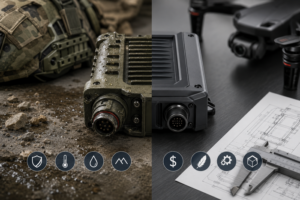
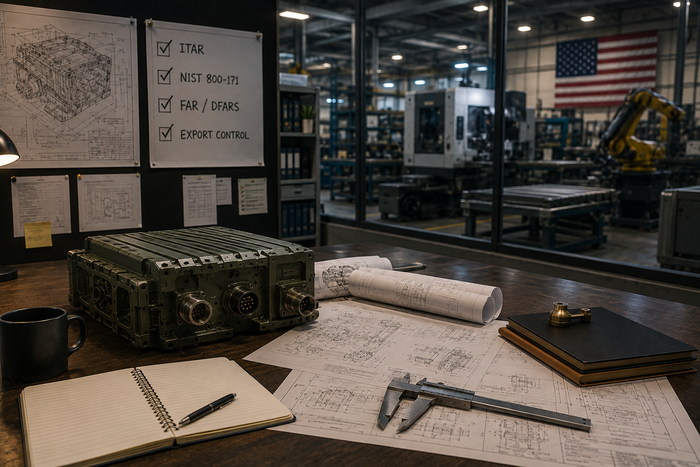
Selecting the right design partner is a critical decision for any defense product development program. Beyond engineering expertise, organizations should evaluate whether a partner understands key defense requirements such as ITAR compliance, NIST SP 800-171 cybersecurity, FAR and DFARS contract considerations, secure handling of controlled technical data, and manufacturing readiness. Asking the right questions early helps reduce program risk, improve compliance, protect sensitive information, and establish a stronger foundation for successful defense product development.
Why compliance starts with your development partner
Defense product development requires more than designing a product that meets technical and performance requirements. Engineering decisions made throughout the development process can influence how controlled technical data is managed, how cybersecurity risks are addressed, how documentation is maintained, and how efficiently a product progresses from concept to manufacturing. Selecting a design partner that understands these considerations from the outset helps reduce program risk, improve collaboration, and support a smoother path toward qualification, production, and long-term program success.
Questions every defense company should ask
Before selecting a product development partner, consider asking the following questions:
- Export-Controlled Technical Data: How will our controlled technical data be protected throughout the product development process?
- Cybersecurity: Does your engineering environment align with NIST SP 800-171 and other applicable cybersecurity requirements?
- ITAR Compliance: Are your processes designed to support projects involving ITAR-controlled technical data?
- FAR & DFARS: How do you help customers navigate applicable federal acquisition and defense contract requirements?
- Quality & Configuration Management: What systems are in place to maintain documentation, traceability, and revision control?
- Manufacturing Readiness: Can you support the transition from prototype development to production while maintaining quality and compliance?
- Lifecycle Support: Are you equipped to support engineering, testing, manufacturing, and product evolution throughout the program lifecycle?
These questions apply whether you’re vetting a partner for a UAS payload system, a UGV control architecture, or a USV sensor package, the compliance and data-handling standards don’t change based on the platform.
ITAR: Protecting export-controlled technical data
The International Traffic in Arms Regulations (ITAR) establish requirements for the handling, storage, and transfer of defense-related technical data. When working on ITAR-controlled programs, organizations should ensure that design partners have processes in place to protect sensitive information, restrict unauthorized access, and maintain appropriate controls throughout the product development lifecycle. Evaluating these capabilities early helps reduce compliance risks while supporting secure collaboration across engineering, manufacturing, and program stakeholders.
- Data Protection: How is export-controlled technical data stored, accessed, and shared?
- Access Controls: Who can access project information, and how are authorization levels managed?
- Secure Collaboration: What measures are used to protect technical data throughout the design process?
- Documentation Practices: How are engineering documents, revisions, and design records controlled and maintained?
- Program Readiness: Does the organization have established processes to support ITAR-controlled development programs?
This keeps the section practical and avoids providing legal advice while naturally leading into the next section on NIST SP 800-171 &a CMMC, where the discussion shifts from export controls to cybersecurity.
NIST SP 800-171 & CMMC: Cybersecurity beyond the firewall
As defense programs become increasingly digital, cybersecurity extends beyond network protection to encompass the entire product development environment. NIST SP 800-171 establishes security requirements for protecting Controlled Unclassified Information (CUI), while the Cybersecurity Maturity Model Certification (CMMC) verifies that organizations have implemented appropriate cybersecurity practices. When evaluating a design partner, it is important to understand how they safeguard sensitive project data, manage secure collaboration, and support evolving Department of Defense cybersecurity expectations.
- Controlled Unclassified Information (CUI): How is sensitive project information protected throughout the development process?
- Secure Engineering Environment: What cybersecurity controls are in place to protect engineering systems, files, and communications?
- Access Management: How is access to technical data restricted and monitored across project teams?
- Cybersecurity Readiness: Are development processes aligned with NIST SP 800-171 and applicable CMMC requirements?
- Risk Management: How are cybersecurity risks identified, documented, and addressed throughout the product lifecycle?
FAR & DFARS: Understanding defense contract requirements
- Contract Requirements: How do your engineering processes support applicable FAR and DFARS requirements?
- Documentation & Traceability: How are design records, revisions, and project documentation maintained throughout development?
- Supply Chain Management: What processes are in place to support supplier oversight, traceability, and risk mitigation?
- Quality & Compliance: How do you ensure engineering activities align with contractual quality and reporting requirements?
- Production Readiness: How do your development practices help support a successful transition from prototype to defense manufacturing?
Evidence of a compliance-ready development partner
Look for concrete signals that a partner takes these requirements seriously: controlled access to project data, revision-controlled documentation, configuration management practices, secure collaboration systems, defined supplier controls, and a documented quality-management system. These are things you can ask to see, not just claims to take at face value.
| Framework | Primary Focus | Why It Matters |
|---|---|---|
| ITAR | Export-Controlled Technical Data | Regulates the handling, storage, and transfer of defense-related technical data to help prevent unauthorized access or export. |
| NIST SP 800-171 | Cybersecurity Controls | Establishes security requirements for protecting Controlled Unclassified Information (CUI) within non-federal systems and organizations. |
| CMMC | Cybersecurity Certification | Validates that defense contractors have implemented cybersecurity practices appropriate for protecting sensitive defense information. |
| FAR | Federal Acquisition | Defines the policies and procedures governing procurement and contract performance across U.S. federal agencies. |
| DFARS | Defense Contract Requirements | Supplements FAR with Department of Defense-specific requirements covering cybersecurity, reporting, supply chain oversight, and contractor obligations. |
| CUI | Sensitive Information Protection | Controlled Unclassified Information requires appropriate safeguards throughout engineering, collaboration, manufacturing, and lifecycle management. |
Frequently asked questions
What is ITAR?
The International Traffic in Arms Regulations (ITAR) are U.S. export control regulations that govern the manufacture, sale, and handling of defense-related articles, services, and technical data. Companies working on defense programs should understand how ITAR requirements affect engineering, collaboration, documentation, and the protection of export-controlled information throughout product development.
What is NIST SP 800-171?
NIST SP 800-171 is a cybersecurity framework that establishes requirements for protecting Controlled Unclassified Information (CUI) stored or processed by non-federal organizations. It provides security controls designed to reduce cyber risks and is commonly required for organizations supporting Department of Defense programs.
What is the difference between FAR and DFARS?
The Federal Acquisition Regulation (FAR) establishes the primary rules governing federal government procurement. The Defense Federal Acquisition Regulation Supplement (DFARS) builds upon FAR by introducing additional requirements specific to Department of Defense contracts, including cybersecurity, reporting, and supply chain considerations.
Why should I evaluate compliance when selecting a design partner?
A design partner’s engineering processes can directly influence data security, documentation, quality management, manufacturing readiness, and regulatory compliance. Evaluating these capabilities early helps reduce project risk, improve collaboration, and support a smoother transition from concept through production.
Does every defense project require ITAR compliance?
No. ITAR applies only to products, technical data, and services covered by the U.S. Munitions List (USML). Some defense programs may instead involve Controlled Unclassified Information (CUI), NIST SP 800-171 requirements, or other contractual obligations depending on the nature of the work.
Can a product development partner help support defense compliance requirements?
Yes. While regulatory responsibility ultimately remains with the contracting organization, an experienced product development partner can implement engineering practices that support secure data handling, documentation, configuration management, verification, and manufacturing readiness, helping reduce compliance and program risks throughout development.
Selecting the right defense product development partner
Selecting a product development partner is about more than engineering expertise, it is about choosing an organization capable of supporting the technical, security, quality, and compliance requirements of defense programs. From protecting export-controlled technical data and implementing secure engineering practices to maintaining documentation, traceability, and manufacturing readiness, the right partner can help reduce program risk throughout the product lifecycle.
When evaluating potential partners, look for a team that combines multidisciplinary engineering capabilities with a structured development process, a strong understanding of defense program requirements, and a commitment to quality and secure collaboration. Addressing these considerations early can help streamline development, minimize costly delays, and establish a solid foundation for successful defense product development.
Ready to discuss your defense program?
Whether you’re developing a new defense technology, enhancing an existing system, or preparing a product for manufacturing, selecting the right engineering partner can have a lasting impact on program success. If you’re evaluating product development partners or have questions about ITAR, NIST SP 800-171, FAR, DFARS, or defense product development, our team is here to help you navigate the next steps.
Generate Better Concepts!
We’ve created a free workbook teaching you how to generate concepts that fit your product development needs.
Download your free workbook now!
About Synectic Product Development: Synectic Product Development is an ISO 13485-certified, full-scale product development company. Vertically integrated within the Mack Group, our capabilities allow us to take your design from concept to production. With over 40 years of experience in design, development, and manufacturing, we strive for ingenuity, cost-effectiveness, and aesthetics in our designs. Learn more about our product design services and see how we can help with your next project.