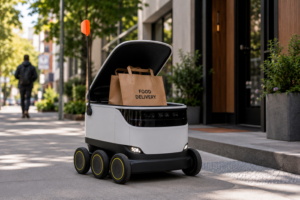

Artificial Intelligence (AI) refers to software that uses algorithms to analyze large data sets, identify patterns, and make decisions based on those patterns when prompted. What initially simulated human reasoning for simple and specialized tasks has evolved into a versatile and adaptive technology capable of natural language processing and real-time decision-making across various applications.
AI has worked its way into many aspects of our lives, and the technology is rapidly transforming the way we work. The impacts of this new tool have been felt across all industries, and the engineering and product development world is no exception. From cost reduction to design optimization to predictive modeling, AI is helping engineers to do their jobs more efficiently.
AI tools are integrated into the product development process for three key reasons:
- Time saving – These models can analyze large quantities of data quickly, reducing the manual effort typically required.
- Design optimization – AI models can compare hundreds of different designs based on input parameters and research data, helping engineers to identify the optimal solution.
- Cost reduction – Since these models help to save time and provide design insights, this reduces labor, fabrication, and maintenance costs, saving valuable resources.
Now, we’ll look at where you can integrate AI tools into your work, helping you to expedite the product development process and focus on innovation.
AI in product design
Literature review
When developing a new product, an important first step is reviewing relevant background information, comparing approaches, and quantifying the parameters that you’ll be working with throughout the design process. This can take up to several months to complete, and more time is spent reading through papers than innovating and designing.
Now, AI can help to streamline this process. Tools like GenexAI can automate material and evidence reviews of text, video, and audio data. They can read, summarize, and organize large volumes of information relevant to your project. Though you’ll still need to select relevant sources and critically analyze them to inform product development, using AI tools can cut the time to conduct a literature review from several months to just 4-5 days, saving time and helping you get the information you need faster.
Risk assessment
One of the most important aspects of product development is risk assessment. If this doesn’t happen early and thoroughly, expensive development may go to waste because of a risk that has been overlooked. Using AI to perform a comprehensive risk analysis based on data from similar products and their development processes can help you identify and plan for potential risks early on.
In the same time that it would take a human to perform a risk assessment, AI can analyze huge amounts of data and create a more comprehensive review. This lets you identify and plan for more risks early on, reducing the likelihood that you miss an important factor that heavily impacts your design. AI technology can also perform real-time analysis, meaning that if new data emerges, the model can update its assessment to reflect new findings and forecast new potential risks.
Creating a product development specification
AI can help you create a Product Development Specification, or PDS. A PDS is a document that includes user and functional requirements, target performance, environmental conditions, regulatory constraints, and testable acceptance criteria for your device. AI can gather data from existing PDSs to create a template for your product, or you can use it to populate a template based on the existing research and information that you’ve gathered.
AI in prototype development
AI intergration in modeling software
Popular engineering modeling software platforms can be difficult to navigate without prior knowledge. Now, AI models are built directly into these platforms to streamline the modeling process and make tool usage easier for those who may not have experience. These AI models are trained in simulations and models created in the software itself, allowing them to generate responses that are more relevant and easier to implement.
Not only can this software generate potential design options based on input parameters, but you can also use them to perform preliminary analysis to understand and fix design flaws. This reduces the costs associated with fabricating parts only to discover that they may not work, and that you need to go back to the drawing board.
Data analysis
During the design process, you need a way to analyze and understand the data that you’ll collect, whether that be from a computer simulation or a hands-on experiment.
If you don’t have much experience with data analysis or coding software, AI can help write a program to interpret and understand your data. GitHub Copilot AI coding assistant can create code based on your prompts detailing what the program should do. Because it is integrated into whatever platform you select to run your code, GitHub Copilot has the context and information it needs to create new functions, debug errors, and use the correct syntax to make a program that works.
If you have large volumes of data, machine learning models can make analysis more manageable and informative. AI can analyze large volumes of data very quickly, and machine learning algorithms can identify patterns that traditional analysis software may miss, leading to a more informed analysis and better insights.
Both applications of AI reduce the time needed to perform important analysis, making it quicker to inform next steps and transition to the manufacturing process.
AI in manufacturing
Automation
AI is increasingly used in the manufacturing space to automate tasks. If you need to create many test products, you can use AI to automate tasks that can be done by a computer instead of a human. This can reduce errors and minimize the amount of time you spend on repetitive tasks, allowing you to dedicate your attention elsewhere.
Predictive maintenance
Predictive AI models can forecast areas of fatigue during manufacturing processes and anticipate failure before it occurs. From a production standpoint, you can use it to predict when maintenance will be needed for various machines. This not only extends the lifespan of machines and ensures efficiency, but it also makes sure that when a machine does need maintenance, you are prepared.
Quality control
AI powered quality control systems can use machine learning and image recognition to inspect products as they are created and identify if defects occur. These models can detect any present flaws more quickly, accurately, and consistently than human inspectors, which can reduce errors and improve quality throughout the manufacturing process.
Things to keep in mind
Like CAD software, Artificial Intelligence models are powerful tools that can aid the design process, but they aren’t a replacement for skilled engineers with technical training and experience. AI doesn’t possess the creative, problem-solving, or critical thinking abilities that engineers do, so it’s important to keep the following in mind when using these tools:
- Try not to use AI for idea generation. AI uses patterns to make decisions and lacks the ability to come up with creative solutions to new problems. It can’t do the project for you, but it can streamline the process and make your job easier from start to finish.
- Be mindful that AI models can reflect and amplify any biases present in the dataset used for training. Even if relevant data exists, it will not be included in the generated response unless it is contained within the data set that the AI model was trained on. AI lacks human oversight and needs human supervision to be used effectively.
The future of AI in engineering
AI is transforming the product development process, offering tools for development teams to work faster and gain more insight, leading to a streamlined process that produces optimized solutions. As this technology continues to evolve, its role in this process will only grow. Companies are moving towards AI integration in their operations, with over 60% noting some level of productivity improvement after this change.
This will also come with the emergence of new roles within the engineering field. Machine Learning engineers and computer scientists will help to develop new AI technologies and capabilities. Data scientists and information systems managers will apply these new capabilities to complex data sets, and robotics engineers will help integrate AI into automated physical devices capable of making decisions.
Though the integration of AI may take over many entry-level engineer responsibilities, these models can never replace the creative, critical thinking, and problem-solving abilities of a skilled engineer. Even as it evolves, AI will always be a tool, helping you take an idea and transform it into a fully developed solution.
Get a Free Quote
About Synectic Product Development: Synectic Product Development is an ISO 13485 certified, full-scale product development company. Vertically integrated within the Mack Group, our capabilities allow us to take your design from concept to production. With over 40 years of experience in design, development, and manufacturing, we strive for ingenuity, cost-effectiveness, and aesthetics in our designs.